
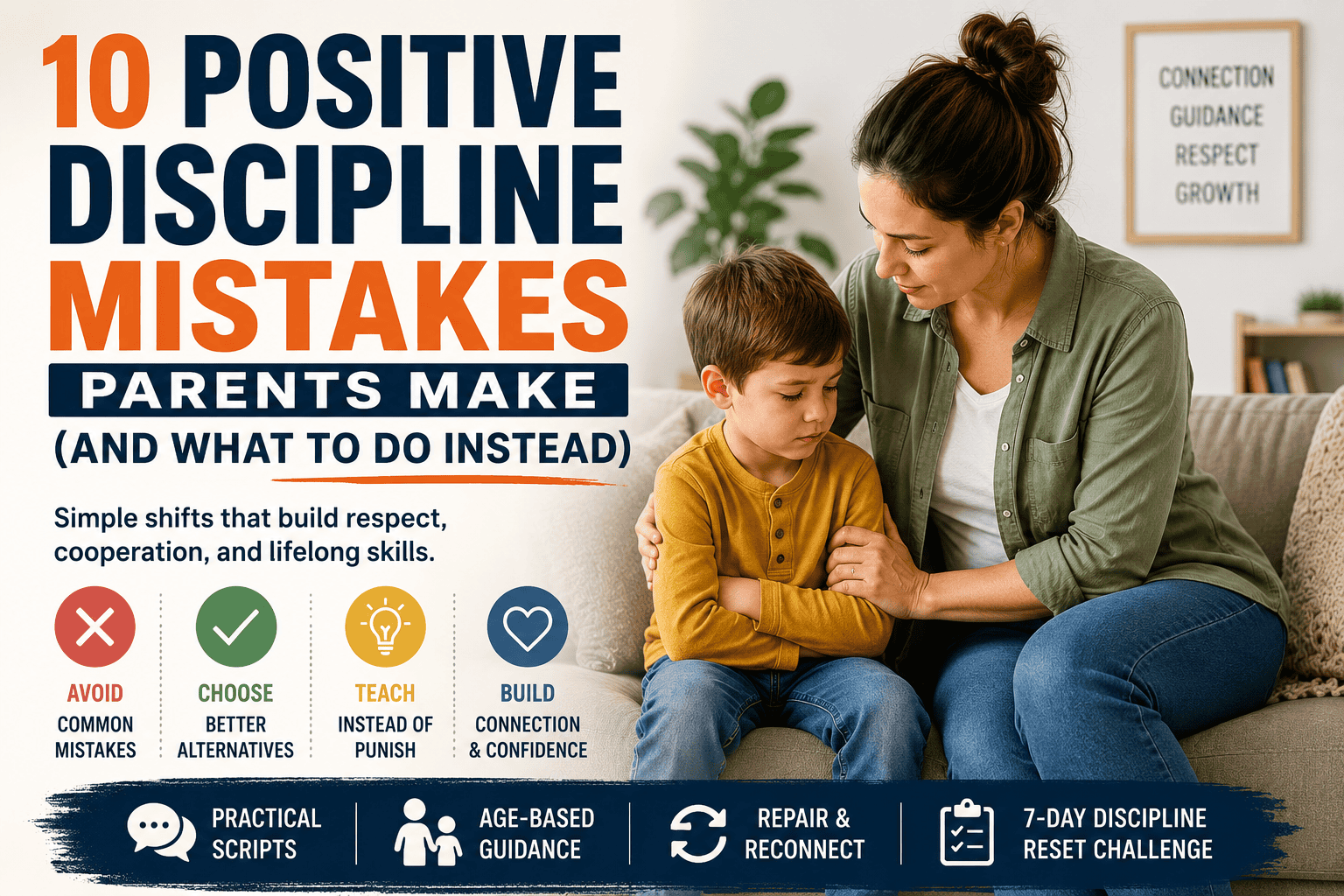
It is 7:30 AM on a frantic Tuesday morning, and you have already spent twenty minutes trying to usher your family toward the front door. You told yourself when you woke up that you wouldn’t yell today. You promised yourself that your home would remain a calm space. Then, your child ignores your request to put on their shoes for the fifth time, continuing to stack plastic building blocks on the rug as if your voice were background static. Suddenly, before you even realize you have pulled the plug on your own patience, you hear a loud, sharp tone echoing off the hallway walls. It is your own voice, getting much louder and harsher than you ever intended.
If you have lived through a morning like that, you are in very good company. Countless well-intentioned parents find themselves caught in this exact loop: reading the books, committing to positive parenting strategies, and yet defaulting to reactive patterns the moment daily stress hits a peak. Standing in a messy hallway with car keys in your hand, it is incredibly easy to feel a deep wave of parent guilt.
Here is a reassuring truth that child development professionals often emphasize: making a discipline mistake does not make you a bad parent. Real family life is fluid, messy, and unpredictable. The important part of parenting isn’t maintaining a state of continuous, artificial perfection; it is learning how to recognize common behavioral traps, repairing the connection with your child when you overreact, and building small, consistent daily habits that shift your approach from emotional reaction to intentional coaching.
Quick Answer: Turning Mistakes into Momentum
Positive discipline mistakes typically happen when parents find themselves emotionally overwhelmed, tired, or operating under unrealistic expectations of child development. Instead of proactively guiding a child, parents default to reactive habits like yelling, issuing repetitive warnings, or using arbitrary punishments.
Most common discipline mistakes can be corrected without permanently harming your relationship with your child. By shifting toward clear communication, establishing predictable household boundaries, and utilizing a structured response framework, you can transform moments of behavioral friction into valuable opportunities for long-term learning and emotional regulation.
What Is Positive Discipline?
Teaching Instead of Punishing
To implement positive discipline effectively, it helps to understand its linguistic root. The word discipline comes from the Latin disciplina, which means “instruction” or “teaching.” Positive discipline builds on this concept by shifting away from traditional punishment, which often focuses on making a child feel discomfort to pay for a past error. Instead, it is an evidence-informed framework designed to focus on teaching long-term cognitive and emotional skills before behavior deteriorates.
Building Long-Term Skills
Instead of using external fear or temporary compliance to force obedience, positive discipline treats a difficult moment as a teaching opportunity. The focus moves away from short-term control and toward long-term skill building, including self-regulation, problem-solving, and accountability.
📊 Discipline Approach Contrast
- Traditional Parenting Focus: Identifies a behavioral error, applies an arbitrary punishment, and relies on short-term, fear-based compliance.
- Positive Discipline Focus: Identifies a behavioral error, applies a related consequence, and guides the child toward internal self-regulation skills.
Common Misconceptions
- Permissiveness: Positive discipline is not permissive parenting. Permissive parenting lacks clear structure, while positive discipline requires clear, firm household rules held with respect and empathy.
- Lack of Boundaries: It does not mean avoiding boundaries or consequences. It means addressing uncooperative behavior directly without resorting to shouting, shaming, or isolation.
Why Parents Make Discipline Mistakes
Recognizing why we fall into reactive discipline loops is essential for moving past parent guilt. Most everyday parenting mistakes do not happen out of a lack of love; they occur when an adult’s coping resources are pushed past their functional limit.
- Chronic Fatigue and Stress: When a parent is continuously short on sleep or overwhelmed by career and financial workloads, their internal capacity to handle minor boundary-testing drops dramatically.
- Unrealistic Expectations: It is incredibly easy to accidentally expect adult-level emotional control from a young child whose brain is still actively building self-regulation pathways.
- Childhood Blueprints: Under high stress, the human brain automatically defaults to the scripts it observed growing up. Many parents repeat the exact yelling or shaming patterns they experienced as children, simply because it is their deepest behavioral blueprint.
- Inconsistent Daily Routines: When household schedules are erratic, transitions are abrupt and unstructured, which naturally increases child anxiety and boundary-pushing.
Acknowledging these pressures allows us to look at our habits honestly without sliding into self-blame. Progress in parenting happens through small, steady adjustments over time.
The 10 Most Common Positive Discipline Mistakes
Instead of looking at these habits as personal failures, view them as predictable, common traps that caring parents fall into when they are tired or stressed. Identifying how these habits work is exactly how you replace them with supportive alternatives.
Mistake 1: Yelling Instead of Coaching
- Why It Happens: Loud child behavior can trigger an automatic stress response in an adult. Your heart rate climbs, and your primitive brain urges you to match your child’s volume to regain immediate control of the environment.
- Why It Doesn’t Work: Yelling shifts the child’s focus away from their behavioral mistake and moves it into survival mode. They stop processing your lesson and focus entirely on protecting themselves from your anger.
- Better Alternative: Use a deliberate low and steady tone. Drop your volume as your child raises theirs.
- What to Say Instead: “I am standing right next to you. I need to hear your regular speaking voice before we figure this out together.”
- Practical Example: Your child starts screaming because playtime is over. Instead of shouting over the noise, walk close, drop to their level, and deliver the boundary in a steady whisper.
Mistake 2: Giving Too Many Warnings
- Why It Happens: Parents often use warnings to avoid the discomfort of holding a hard limit or managing a child’s resulting disappointment.
- Why It Doesn’t Work: When you say, “I am counting to three… one… two… two and a half,” you teach your child that they do not need to cooperate on your first command. They learn that they have a multiple-warning cushion before your words carry real consequences.
- Better Alternative: The “One Reminder” Rule. Issue one clear direction, check for understanding, and then move immediately to action if cooperation drops.
- What to Say Instead: “I am giving you one reminder to pack your shoes. If you choose to leave them on the rug, they will rest in the closet box until tomorrow morning.”
- Practical Example: Instead of repeating your bedtime request five times, walk over, place a gentle hand on their shoulder, state the rule once clearly, and guide them physically toward the bathroom.
Mistake 3: Inconsistent Consequences
- Why It Happens: Parents often choose consequences based on their own immediate energy level. If you are rested, you hold a firm line; if you are exhausted, you let the boundary slide away to buy a moment of quiet.
- Why It Doesn’t Work: Inconsistency breeds anxiety and boundary-pushing. If a boundary is a solid wall on Monday but a soft curtain on Wednesday, your child will continuously spend energy testing the limit to see which version they get today.
- Better Alternative: Establish fewer rules, but enforce them with predictable consistency.
- What to Say Instead: “Our family rule is that screens rest before meals. This rule stays the same every day, even when it feels hard to turn it off.”
- Practical Example: If you have established that toys left spread across the floor go into a temporary timeout bin, hold that line every single evening, regardless of whether you are tired or busy.
Mistake 4: Expecting Adult Self-Control
- Why It Happens: We frequently confuse a child’s advanced verbal intelligence with emotional maturity. Because an eight-year-old can speak eloquently, we assume they should also be able to regulate their impulses perfectly under pressure.
- Why It Doesn’t Work: Children are still actively developing the neurological architecture needed for planning, impulse control, and emotional regulation. Expecting them to navigate big frustrations without a breakdown sets them up to fail.
- Better Alternative: Co-regulate first. Act as an emotional anchor until their system settles enough to process logic.
- What to Say Instead: “Your body is filled with massive, angry energy right now. It is completely okay to feel mad. I am sitting right here with you until you feel steady.”
- Practical Example: A preschooler throws a tantrum because their brother took a plastic block. Instead of demanding they “grow up and share,” acknowledge how intensely frustrating sharing can feel to a five-year-old brain.
Mistake 5: Punishing Emotions Instead of Behavior
- Why It Happens: Intense child displays of anger, sadness, or disappointment can feel uncomfortable, disruptive, or personally disrespectful to a parent.
- Why It Doesn’t Work: Telling a child to stop crying or punishing them for feeling angry forces them to suppress their feelings. They learn that their inner emotional world is dangerous or unwelcome, which can trigger long-term behavioral anxiety.
- Better Alternative: Separate the valid emotion from the uncooperative behavior. Allow the feeling while holding a firm line on the action.
- What to Say Instead: “It is completely okay to feel angry that we have to leave the park. It is not okay to throw your water bottle. Throwing means the bottle goes in my bag.”
- Practical Example: Your child stomps their feet and cries because tablet time is over. Allow them to cry and express their disappointment safely without changing your boundary or sending them to isolation.
Mistake 6: Lecturing During Emotional Overdrive
- Why It Happens: Busy parents naturally want to explain the logic and fairness behind their household boundaries, assuming that if the child understands the why, they will stop crying.
- Why It Doesn’t Work: Children may find it much harder to think clearly, regulate emotions, and solve problems when they are overwhelmed. They cannot process complex verbal logic. A long, analytical lecture simply sounds like overwhelming noise, which extends the duration of the breakdown.
- Better Alternative: Prioritize physical safety and silence first. Save your teaching for hours later when their system is completely calm.
- What to Say Instead: (During the meltdown): Say nothing, or use three words: “I’m right here.” (Hours later at bedtime): “Let’s talk about what happened this afternoon when it was time to leave the store.”
- Practical Example: Your child is screaming on the floor because you cut their toast into rectangles instead of triangles. Sit nearby quietly, protect their safety, and hold your breath instead of launching into an explanation of geometry.
Mistake 7: Using Shame
- Why It Happens: When parents feel completely desperate or embarrassed in public spaces, they may resort to sarcastic or shaming remarks to shock the child into compliance.
- Why It Doesn’t Work: Shame targets a child’s core identity (“I am a bad kid”) rather than their specific behavior (“I made a poor choice”). This can damage internal self-esteem and cause them to hide their mistakes or lie to avoid future disapproval.
- Better Alternative: Focus your language exclusively on a neutral description of the physical actions.
- What to Say Instead: “There are blocks spread across our rug. Our family team agreement is that blocks go into the clear bin before we move to lunch.”
- What to Avoid: “Look at this disgusting room! Why can’t you just clean up after yourself like a normal kid?”
- Practical Example: Your child spills a cup of milk on the clean table. Avoid groaning or rolling your eyes. Hand them a clean cloth and guide them through wiping it up objectively.
Mistake 8: Threatening Consequences You Won’t Enforce
- Why It Happens: In a flash of intense frustration, parents often issue sweeping, massive threats to shock the child into immediate cooperation.
- Why It Doesn’t Work: When you say, “If you don’t clean that up, I’m throwing every toy you own in the trash!” your child quickly realizes you lack the intention to execute the rule. This teaches them that your boundary words are empty bluffs, encouraging them to ignore future limits.
- Better Alternative: Choose immediate, related, and short-term logical consequences that you are prepared to carry out.
- What to Say Instead: “Because these markers were used on the wall instead of the paper, they will take a rest in my office closet box until tomorrow morning.”
- Practical Example: Your child refuses to leave a birthday party. Instead of threatening to “never take them anywhere ever again,” calmly carry them to the car and explain that because departure took extra time, there won’t be time for an evening video game.
Mistake 9: Ignoring Cooperative Behavior
- Why It Happens: It is incredibly easy to take peaceful, cooperative moments for granted. When our homes are quiet and harmonious, adults naturally use that time to finish workflows or chores, staying completely silent.
- Why It Doesn’t Work: Children require parental attention to thrive. If they learn that you stay silent when they are cooperating, but drop everything and look at them when they create an immediate crisis, they will automatically default to disruption to secure your presence.
- Better Alternative: Actively catch your child doing things right. Use specific, descriptive encouragement to anchor their positive efforts.
- What to Say Instead: “I noticed you quietly shared your green marker with your sister when she asked. Look at her face—she feels so happy to play with you.”
- Practical Example: Your children are building blocks together peacefully on the rug. Walk over, sit next to them for sixty seconds, and describe the specific teamwork you observe.
Mistake 10: Expecting Immediate Behavioral Change
- Why It Happens: We live in a fast-paced environment and often expect instant results from our positive discipline strategies, tracking behavior as if it were a switch.
- Why It Doesn’t Work: Developing long-term emotional regulation, accountability, and life skills is a non-linear process that unfolds over months and years. Expecting instant perfection creates unnecessary parental frustration and causes you to give up on helpful habits too quickly.
- Better Alternative: Focus entirely on steady progress over perfection. Look at long-term behavioral trends rather than isolated daily missteps.
- What to Say Instead: “Learning a new skill takes real practice and time. We had a tough morning, and we are going to try again together this afternoon.”
- Practical Example: Your child manages a transition smoothly on Thursday but throws a major tantrum on Friday. Remind yourself that a single regression is a normal part of child development, not a sign that your parenting framework isn’t working.
The LittleLearnerParent GUIDE Framework
To stay grounded when behavioral friction hits, parents need an actionable roadmap. The GUIDE Method functions as a real-time decision-making process for discipline, helping you step out of reactive habits and move toward intentional coaching.
G — Get Calm First
- Explanation: Pause, stretch your posture, and take a long, deep breath before reacting. Regulating your own emotional level is the required first step before you can guide your child.
- Practical Example: Your child drops a bowl of cereal on the floor. You close your eyes, take one slow breath, and drop your shoulders before saying a single word.
- Key Takeaway: You cannot teach emotional control if your own voice is escalatory.
U — Understand the Need
- Explanation: Look past the loud, visible symptom of challenging behavior to identify the root cause. Evaluate if the child is tired, hungry, overstimulated, or lacking focused connection.
- Practical Example: Recognizing that your child’s intense pre-dinner whining is driven by physical hunger rather than an intent to be defiant.
- Key Takeaway: Addressing the underlying vulnerability automatically dissolves a huge amount of behavioral resistance.
I — Invite Cooperation
- Explanation: Instead of barking out rigid directives, provide your child with limited, pre-approved choices. This satisfies their natural drive for autonomy while ensuring your boundary is respected.
- Practical Example: “It is time to clean up. Do you want to put the blocks in the bin first, or should we gather the puzzle pieces together?”
- Key Takeaway: Giving small choices turns a potential power struggle into a collaborative interaction.
D — Direct with Respect
- Explanation: State the household boundary clearly, calmly, and positively. Use your physical presence by dropping to eye level and keeping your vocal volume steady without lecturing or shaming.
- Practical Example: “I cannot let you hit your brother. My job is to keep everyone safe. Please use your words to tell him you’re frustrated.”
- Key Takeaway: Boundaries are an act of care that creates a predictable, safe home environment.
E — Encourage Growth
- Explanation: Once the emotional situation settles, use the moment to teach. Review the misstep and provide a specific conversational script or model an environmental repair tool.
- Practical Example: Handing your child a damp cloth and guiding them through wiping up the spilled cereal together without adding an angry lecture.
- Key Takeaway: True discipline is about teaching long-term skills, not enforcing short-term submission.
Repair After a Discipline Mistake
Every single parent yells, overreacts, or makes a discipline mistake at some point. It is a completely normal part of being a human being. Research suggests that these missteps do not permanently damage your child’s emotional development—provided you are willing to practice the vital art of relationship repair.
Evidence-informed parenting programs emphasize that relationship repair is actually where deep resilience and trust are built. When you go back to your child, own your emotional slip, and apologize cleanly without making excuses, you teach them two priceless life lessons: you prove that your love is steady and secure, and you model exactly how to take accountability, show vulnerability, and rebuild a relationship after an error.
📈 The Relationship Repair Process
- Self-Regulation: Pause and breathe until your own emotional baseline settles.
- Physical Connection: Move close, drop to eye level, and offer a soft physical presence.
- Clean Apology: Own your specific mistake clearly without blaming the child’s behavior.
- Collaborative Planning: Discuss how the family team can handle the challenge better next time.
Everyday Conversation Scripts
1. After Yelling or Snapping Under Stress
- Script: “I want to sit with you for a second. I am so sorry I raised my voice and yelled at you earlier when the toys were on the floor. I was feeling tired and rushed, but it was not your fault. It is my job to keep my voice calm, and I made a mistake. Will you accept my apology?”
- Why this works: It models clean accountability by owning the adult’s behavior without making excuses or shifting blame onto the child.
2. After Losing Your Patience and Issuing an Unrealistic Threat
- Script: “Earlier, when I was frustrated about the shoes, I told you that we would never visit the park again. That was an unfair threat, and I said it because my own patience ran out. The park is still open this weekend. Let’s talk about a fair plan to make sure our shoes get put away on the first reminder next time.”
- Why this works: It rebuilds trust by demonstrating that your words are honest, fair, and grounded in reality rather than reactive anger.
3. After Realizing You Enforced an Inconsistent Consequence
- Script: “Yesterday, I let you stay on your device past the timer because I was too tired to help you turn it off. That wasn’t fair to you, because it made our family rules confusing. Today, we are going back to our clear boundary: when the visual timer blinks, the device rests in the drawer. Let’s work together to make sure we follow through today.”
- Why this works: It re-establishes predictable safety by admitting the parent’s inconsistency and warmly returning to clear household boundaries.
4. After Embarrassing or Shaming a Child in a Public Space
- Script: “When we were at the store counter today and you were crying, I used sarcastic words that made you feel small in front of other people. That was wrong of me. You had a right to feel disappointed, and I should have protected your feelings with kindness. I am so sorry I hurt your heart.”
- Why this works: It repairs core emotional safety by validating the child’s underlying feelings and explicitly naming the parent’s behavioral error.
5. After Forgetting to Follow Through on an Established Boundary
- Script: “I noticed I forgot to check your routine chart before we turned on the television tonight. Our team agreement is that your school bag is packed before screens turn on. Let’s turn the screen off for just three minutes right now, complete our bag check together, and then we can return to our family show cleanly.”
- Why this works: It teaches constructive accountability by pausing a preferred activity to collaboratively honor a pre-existing family agreement.
Age-Based Discipline Evolution
As your child grows, your parenting strategies must naturally evolve to match their shifting developmental capabilities.
Toddlers (Ages 2–3 Years)
Toddlers operate entirely in the immediate, physical present. They lack the cognitive capacity to process long, abstract explanations or delayed timelines.
- The Blueprint: Keep instructions down to five words or less. Rely heavily on environment design, immediate physical redirection, and playful challenges to guide cooperation.
Preschoolers (Ages 3–5 Years)
Preschoolers are beginning to understand basic cause-and-effect relationships and are discovering their personal autonomy, which often triggers intense tantrums.
- The Blueprint: Focus on providing limited, pre-approved choices (“Would you like to wear your blue coat or your red coat?”) and anchoring boundaries in predictable, visual daily routine charts.
School-Age Children (Ages 6–8 Years)
Children in this stage have developed excellent language skills and are building complex social connections. They are highly sensitive to fairness and can process logical consequences cleanly.
- The Blueprint: Focus your language on objective, camera-lens descriptions of actual effort. Center your discipline on active environmental repair and natural outcomes rather than arbitrary isolation.
Older Children (Ages 9–12 Years)
Pre-teens crave authentic autonomy, independent decision-making, and private respect. They can spot artificial enthusiasm or insincere parenting scripts instantly.
- The Blueprint: Move toward a collaborative problem-solving model. Sit down during calm evening hours and treat them as capable partners in designing household guidelines, rules, and accountable timelines.
The LittleLearnerParent Discipline Decision Tree
When you face an intense parenting challenge, use this clear, step-by-step diagnostic sequence to navigate the boundary safely:
- Am I personally calm?
- NO: Engage Step G. Stop talking immediately. Cross your arms and take three slow, deep breaths to regulate your own system before speaking.
- YES: Move to Question 2.
- Is my child calm enough to process language?
- NO: Co-regulate first. Stop trying to teach a lesson. Stay close, maintain a neutral face, and validate the intense emotion until their system settles.
- YES: Move to Question 3.
- Am I teaching a skill, or am I punishing an error?
- PUNISHING: Execute a re-frame. Discard the arbitrary penalty (like taking away a weekend activity for a bedroom mess) and replace it with an outcome linked directly to the physical action.
- TEACHING: Move to Question 4.
- Is this expectation developmentally fair for my child’s exact age?
- NO: Adjust the boundary. Simplify the required task and provide step-by-step physical collaboration to help them succeed.
- YES: Initialize the full GUIDE framework with calm, steady confidence.
Myths vs. Facts
- Myth: Positive discipline means your home environment has zero consequences.
- Fact: Positive discipline relies heavily on consequences. However, it avoids arbitrary punishments and focuses on natural or logical consequences that teach real-world cause and effect.
- Myth: Apologizing to your child when you make a mistake makes you look weak.
- Fact: Apologizing builds immense authority based on respect and safety rather than fear. It teaches your child that accountability applies to everyone, strengthening family relationship trust.
- Myth: Children should naturally obey every single command on the very first request.
- Fact: Boundary-testing is a normal, healthy part of child development. It is how children analyze where the boundaries of their environment sit.
- Myth: Positive discipline is just permissive parenting with nicer branding.
- Fact: Permissive parenting lacks structure and consistency. Positive discipline requires maintaining high, firm standards of respect and safety, executed with deep empathy.
- Myth: Strong-willed children only respond to harsh punishments or shouting.
- Fact: Spirited children will passionately fight against arbitrary control, but they naturally respect calm, unshifting boundaries held with genuine empathy.
Frequently Asked Questions
Is positive discipline effective for high-conflict households?
Current evidence indicates that positive discipline is exceptionally effective at lowering overall household conflict. By replacing reactive shouting with predictable routines and clear boundaries, family dynamics shift from adversarial struggles to a collaborative coaching model.
What if my child completely ignores my calm commands?
If your child ignores you, do not repeat yourself from across the room. Walk over, gently place a hand on their arm, drop down to their eye level, and wait for steady eye contact. State your direction once clearly, and ask them to repeat it back to verify processing.
Can positive discipline work with teenagers?
Yes, research suggests that the core principles of authoritative leadership—warmth matched with high behavioral standards—remain deeply effective through adolescence. With teenagers, the approach pivots entirely toward collaborative contract design, shared agreements, and personal accountability timelines.
How do I stay consistent when I am completely exhausted?
Scale down your expectations. Establish fewer family rules—focusing strictly on safety and interpersonal respect—so that you have the internal energy required to enforce those few boundaries with predictable consistency every single day.
What if my child laughs when I try to correct their behavior?
Laughter during a correction is rarely an act of defiance; it is usually an involuntary physical response to internal anxiety or emotional discomfort. Do not increase your anger. Keep your face neutral, drop your volume, and repeat the firm boundary with calm certainty.
The 7-Day Positive Discipline Reset
Are you ready to move past theory and establish a peaceful, non-punitive culture in your home this week? Commit to executing just one small, manageable action item each day:
- Day 1: The Volume Drop: For the next 24 hours, commit to dropping your speaking volume down to a deliberate whisper voice every single time your child raises their voice or challenges a limit.
- Day 2: The Proximity Pass: Walk over and drop down physically to your child’s eye level before you deliver any routine directive or transition warning today.
- Day 3: The One-Warning Cleanse: Implement the “One Reminder Rule.” Issue a clear request once, check for visual processing, and move immediately to action or a logical consequence if cooperation drops.
- Day 4: The 10-Minute Proximity Pass: Turn off your phone, step away from your work, and protect 10 minutes of pure, child-led play with zero adult corrections or direction.
- Day 5: Catch the Win: Actively notice and validate at least two instances of quiet, cooperative behavior today using specific, descriptive encouragement.
- Day 6: The Clean Apology: The very next time your patience slips and you raise your voice, return to your child within twenty minutes, own your actions cleanly, and execute a vulnerable relationship repair pass.
- Day 7: The Trend Reflection: Take a long view of your parenting journey today. Celebrate one area where your family has shown incremental progress over the last month, and remind yourself that consistency matters far more than getting every single interaction perfectly right.
The LLP Daily Positive Discipline Checklist
Print this checklist out or keep it accessible on your phone to audit your home environment before behavioral friction peaks:
- [ ] Physical Check: Have I physically dropped down to my child’s eye level during critical directions today?
- [ ] Reminder Check: Did I stick to the “One Reminder Rule” instead of letting my requests slide into repetitive warnings?
- [ ] Consequence Check: Are the outcomes I am enforcing directly related to the physical behavior, or am I using arbitrary punishments?
- [ ] Praise Check: Did I use specific, descriptive encouragement today to anchor my child’s quiet moments of cooperation?
- [ ] Repair Check: Have I taken accountability and repaired the connection with my child after any emotional slip today?
Conclusion: Progress Over Perfection
Shifting away from old, reactive discipline patterns is a steady, non-linear journey that requires time, patience, and immense self-compassion. Your child’s emotional regulation skills are under active development, and your own self-regulation habits require regular practice to become permanent muscle memory.
There will be afternoons where your patience runs thin, where the schedules move too fast, or where you default to a reactive script. When those moments hit, be gentle with your progress. Take an intentional step back, apply the stoplight technique to reset your own baseline, and focus entirely on the next interaction.
By replacing reactive shouting and arbitrary punishments with the predictable, firm guidance of The GUIDE Method, you aren’t just surviving a temporary morning crisis—you are giving your child a lifelong blueprint for resilience, internal accountability, and secure relationship trust.